
Symbols of Remembrance
The Poppy and the Cornflower
Two flowers from the battlefields, now symbols of remembrance
The poppy of Commonwealth countries
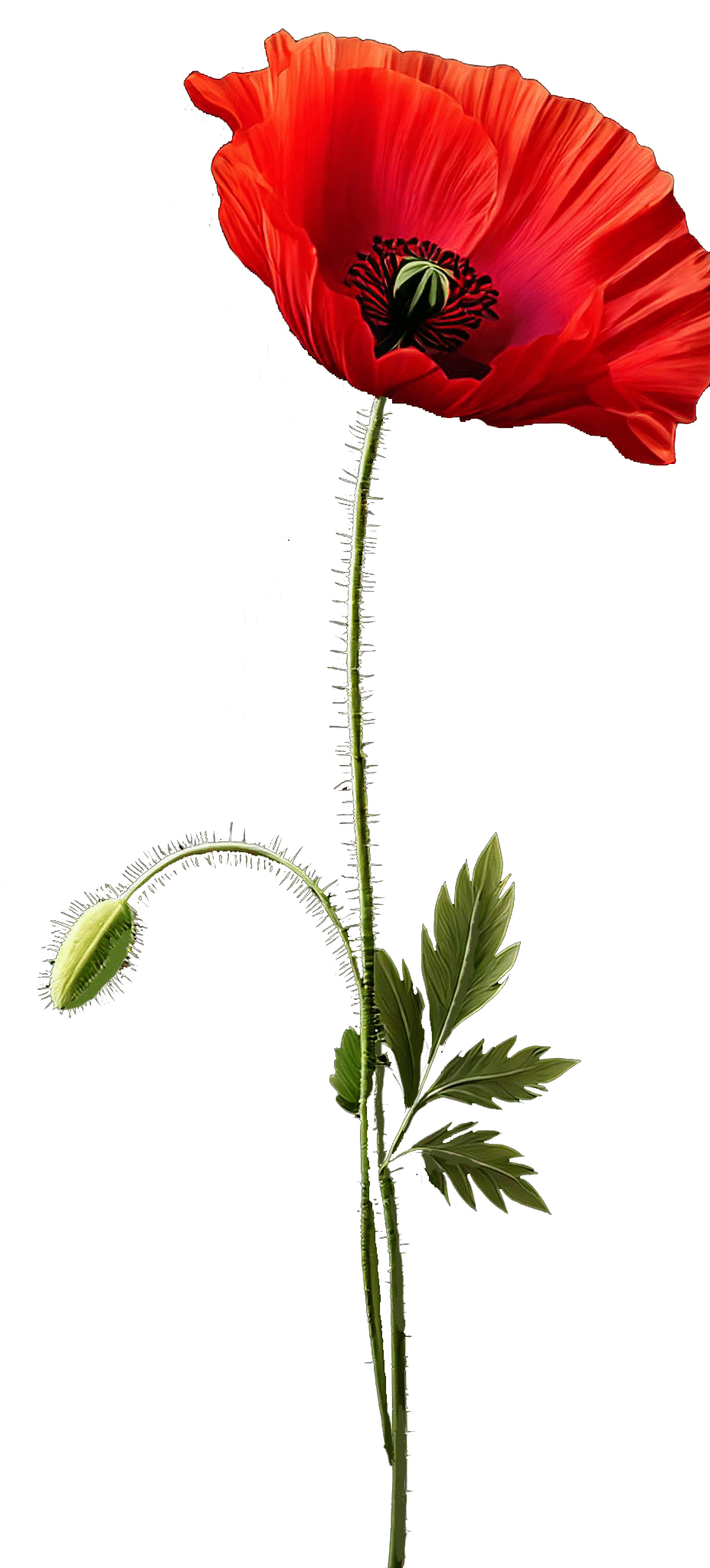
Poppies grow readily in freshly disturbed soil. Lieutenant-Colonel John McCrae, a physician in the Canadian Army Medical Corps, made this observation when he noticed the abundance of poppies growing in the trenches and around the graves of his fallen comrades during the Second Battle of Ypres in May 1915.
This flowering of red blooms against the surrounding desolation reminded him of the blood shed by his comrades. Also a poet, the image inspired him to write the celebrated poem "In Flanders Fields".
In Flanders Fields
John McCrae · 1915
In Flanders fields the poppies blow
Between the crosses, row on row,
That mark our place; and in the sky
The larks, still bravely singing, fly
Scarce heard amid the guns below.
We are the Dead. Short days ago
We lived, felt dawn, saw sunset glow,
Loved and were loved, and now we lie,
In Flanders fields.
Take up our quarrel with the foe:
To you from failing hands we throw
The torch; be yours to hold it high.
If ye break faith with us who die
We shall not sleep, though poppies grow
In Flanders fields.
We Shall Keep the Faith
Moina Michael · 1918
Oh! you who sleep in Flanders Fields,
Sleep sweet – to rise anew!
We caught the torch you threw
And holding high, we keep the Faith
With All who died.
We cherish, too, the Poppy red
That grows on fields where valor led;
It seems to signal to the skies
That blood of heroes never dies,
But lends a lustre to the red
Of the flower that blooms above the dead
In Flanders Fields.
And now the Torch and Poppy Red
We wear in honor of our dead.
Fear not that ye have died for naught;
We'll teach the lesson that ye wrought
In Flanders Fields.
From one reader's emotion to a worldwide symbol
McCrae's poem eventually crossed the Atlantic and moved Moina Michael, an academic and member of the World Young Women's Christian Association (World YWCA). She wrote a response poem and championed the idea of using the poppy as a symbol of remembrance for soldiers who had fallen in battle.
1920
The idea is adopted by the American Legion at a congress. Anna E. Guerin, a YMCA member in France, proposes making and selling fabric poppies on Armistice Day to raise funds for war orphans.
1921
Douglas Haig, founder of the Royal British Legion, decides to sell poppies to provide financial support for wounded and unemployed veterans.
1922
Many countries adopt the symbol of remembrance and support, and begin producing paper poppies.
Today
40 million paper poppies are made by disabled veterans at a factory in Richmond upon Thames. They go on sale at the end of October and are worn until the 11th of November.
Remembrance Sunday — "Poppy Day"
Held on the second Sunday of November, closest to the 11th, this day of commemoration pays tribute to the British and Commonwealth military personnel and civilians who died during both World Wars and in subsequent conflicts.
The Cornflower of France
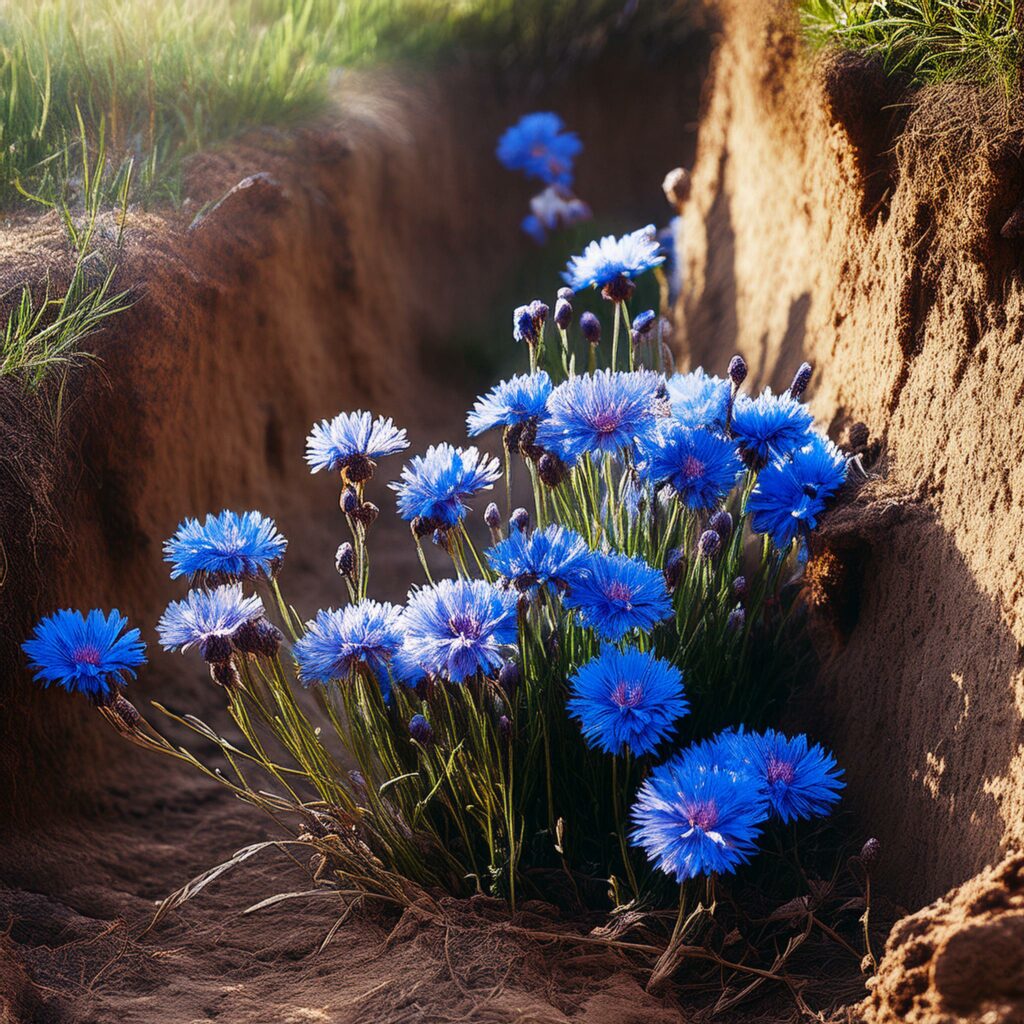
Like the poppy, the cornflower thrives in freshly turned soil. It grew abundantly in the daily-bombarded earth of the Great War's battlefields, its colour a stark contrast to the desolation experienced by the soldiers in the trenches.
The cornflower's blue also evoked the colour of the fresh uniforms of new arrivals at the front, which stood in sharp contrast to the worn and dirty clothing of seasoned fighters.
In 1916, Mme Suzanne Lenhardt, chief nurse at the military hospital at the Invalides, and Mme Charlotte Malleterre decided to organise workshops where wounded soldiers made fabric cornflowers — both to restore their sense of hope and give them a place in society. These artificial flowers, sold to the public, provided the men with a small income.
The Cornflower of France quickly became the emblematic flower of those who died for France. It is officially sold each 11th of November throughout France. After the Second World War, it was also sold on 8th May.
Each year, the Cornflower of France is sold on public thoroughfares by volunteers of the association Oeuvre nationale du Bleuet de France during commemorations. The funds raised go towards social welfare work supporting veterans, war widows, wards of the Nation, wounded soldiers, soldiers on overseas operations and victims of terrorism.
The Oeuvre also supports military personnel currently deployed overseas: the Cornflower of France has contributed to the "Christmas Parcels for Soldiers on Operations" initiative and supports educational activities in schools to promote memory of the conflicts, funding visits to sites of remembrance.