Tribute
Animals in War
Wartime companions yesterday, support for children and the wounded today
They did not choose war — and yet they fought it. Dogs, horses, pigeons, mules: millions of animals served alongside soldiers in the great conflicts of the 20th century. Messengers, rescuers, carriers, companions: the role of animals in war, so often forgotten, deserves to be told.
And their story does not end on the battlefield. Today, animals still bring comfort to those marked by war: soldiers wounded in body or mind, and the children who carry the scars of conflict. From yesterday to today, the same unwavering loyalty.
Dogs: messengers, rescuers, sentinels
During the First World War, tens of thousands of dogs served in every army. Messenger dogs crossed the lines under fire to carry dispatches between the trenches, where no man could pass. Casualty dogs crossed no man's land after battles to find the wounded, bringing them first aid or guiding stretcher-bearers to their side.
Sentry dogs kept watch at night and gave warning of attacks, while draught dogs pulled machine guns and supply carts, notably in the Belgian army. Others, more modest in role but no less precious, hunted the rats of the trenches and simply shared the daily lives of soldiers, offering a little warmth in the midst of hell.
During the Second World War, dogs detected mines, guarded camps and accompanied military units. Today, military dogs continue to serve in armies around the world — and some receive decorations for their bravery.
Horses and mules: the silent strength
The Great War was also the tragedy of horses: it is estimated that more than eight million died between 1914 and 1918, across all armies. They pulled artillery, transported supplies and the wounded through the mud and under shellfire, often to the point of total exhaustion.
Mules and donkeys, more resilient on difficult terrain, accompanied troops through the mountains and across impassable tracks. Their sacrifice — immense and silent — left a deep mark on the soldiers who shared their daily lives: many accounts from French soldiers speak of the pain of seeing these companions in misery suffer.
Carrier pigeons: messengers of the sky
When telephone lines were cut and radio did not yet exist, carrier pigeons remained the most reliable means of communication. Hundreds of thousands of them served during both World Wars, carrying vital messages across enemy lines despite gunfire and gas attacks.
Vaillant, the Pigeon of Verdun
During the Battle of Verdun in 1916, the pigeon Vaillant — the last pigeon held by Commander Raynal, besieged in Fort Vaux — took flight under a deluge of fire and gas to carry the garrison's final message. He died shortly after arriving, poisoned by gas. He was awarded a national commendation, an exceptional honour for an animal. A commemorative plaque at Fort Vaux, near the Memorial of Verdun, honours his sacrifice to this day.
Wartime animals of yesterday, comfort of today
Even in the trenches, soldiers adopted stray dogs and cats: these companions restored a fragment of humanity in the midst of the inhuman. What the soldiers of 1914-18 knew by instinct, science has since confirmed: the presence of an animal soothes, reassures and helps people rebuild.
Today, this power of comfort benefits those whom war continues to mark:
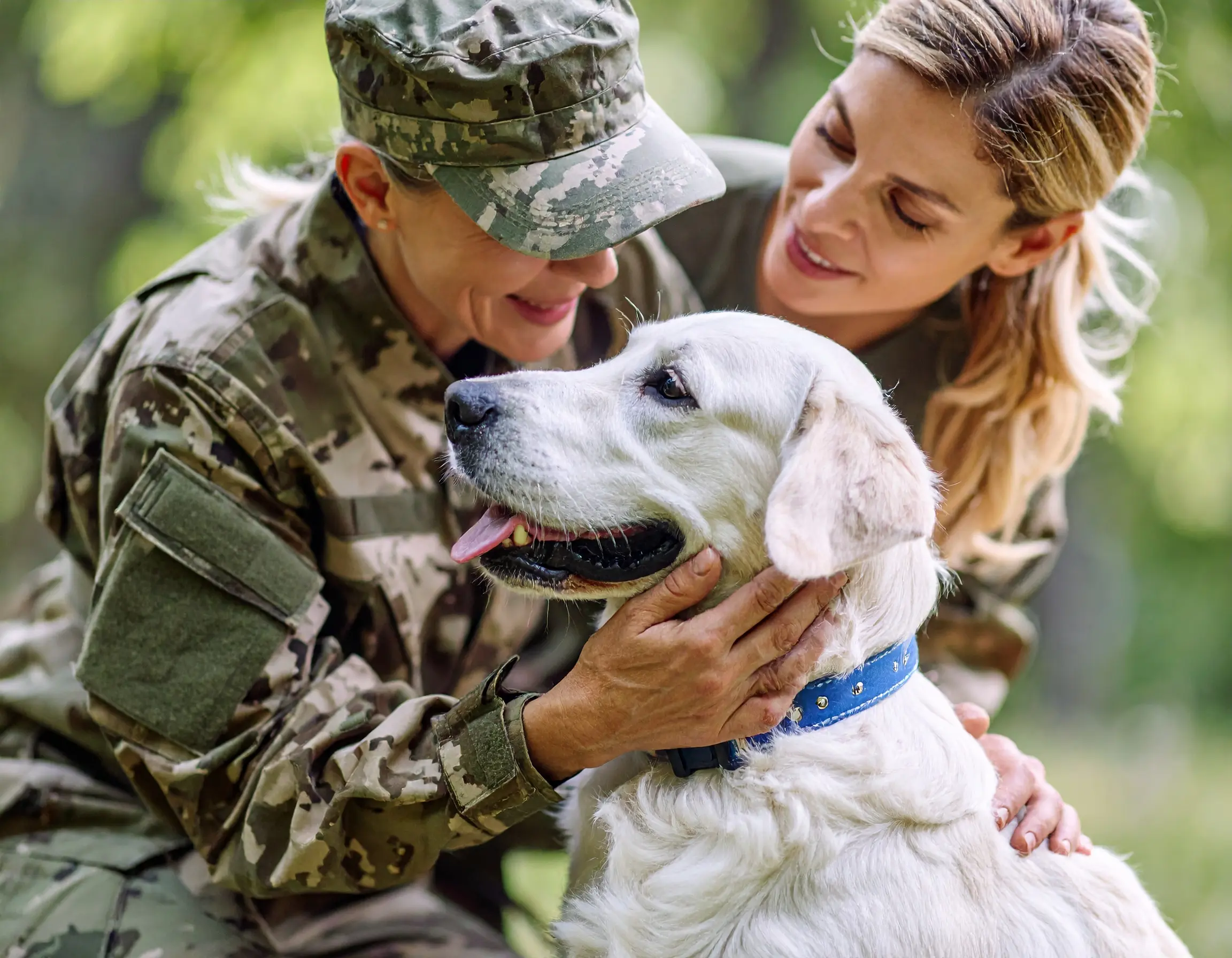
For wounded soldiers
Assistance dogs support military personnel suffering from post-traumatic stress: they calm anxiety attacks, restore a sense of security and help overcome isolation.
For children victimised by war
For displaced children, children in grief, or those marked by a parent's absence, an animal offers a presence that does not judge and asks no questions. Animal-assisted therapy opens spaces for expression where words fall short.
They shared the wars of men. Today, they share in the rebuilding of children.